

The all-but-inevitable coronation of Andy Burnham has, as many Labour insiders have joked to themselves during these extraordinary few weeks, had the feel of a medieval conquest. The King, a knight of the realm, waited in London, bracing for impact as the Earl of Manchester assembled his troops up north. The King watched for weeks as his former bannermen went to kiss the ring of their likely new ruler. The Earl, having won the Battle of Makerfield, sent word he would march on London on Monday. The King, despite insistence from his courtiers that he had the artillery to defend his kingdom, folded and sent word to his rival that he would put up no fight. Andy the Conqueror arrived in London to a hero’s welcome, the foot soldiers having switched allegiance. The coup was blissful and bloodless.
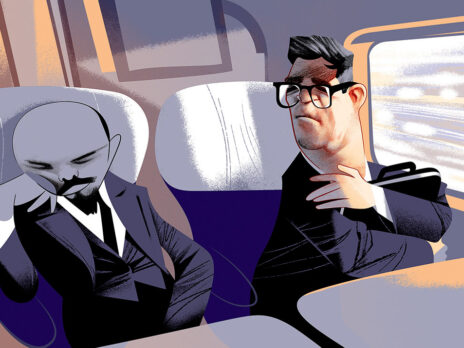
This revolution was televised, the march on London rather prosaic: Burnham’s cavalry was an Avanti West Coast train, tracked by helicopter and broadcast live on BBC News; delayed, in true British fashion. He had only Sally Jameson, the Labour MP for Doncaster Central and a no-nonsense former prison officer, to sternly push through the hoards of TV cameras that awaited him at London Euston. Paparazzi gathered round the taxi carrying the next prime minister and were astonished when a totally random man got out. Wrong car. The man himself arrived minutes later. In Britain’s polite, farcical way, we have just lived through an extraordinary moment in our history. Andy Burnham and the team around him pulled off what many said could never be done, and are now within touching distance of Downing Street.
When did Burnham’s northern conquest begin? He had a sense of “unfinished business” from the moment he left Westminster in 2017, and never ruled out returning. Some of Keir Starmer’s closest allies would suggest the signs were there from the start of his leadership. “Andy was the first person to proactively criticise Keir and tilt for the leadership when things were difficult in 2021,” one recalls. Any time Starmer was struggling, his allies felt, Burnham unhelpfully popped up to remind Labour of his existence. Sue Gray improved relations when she became Starmer’s chief of staff, banning the PM’s team from writing jokes about Burnham into his speeches.
Starmer’s team were jittery about a possible coup as soon as his popularity began to falter in 2025. Lisa Nandy, asked about a possible Burnham return on LBC, said she would support him with “whatever he decides to do”. In a rage, No 10 called her team. “If she’s calling for a new prime minister, she has to resign.”

One week later, Burnham himself made his pitch ahead of the Labour Party conference, asking his party “Are you up for it?” on the cover of this magazine. But at that point, they weren’t. He then tried and failed to win selection for the Gorton and Denton by-election, when Ed Miliband offered his support.
The plan became serious in March 2026, when Burnham had a pivotal conversation with Louise Haigh, the former cabinet minister who had forged a new role for herself as a power-broker and leading figure in the Tribune group of MPs, and with another pivotal person: Nandy, still a serving member of the cabinet. In a secret meeting in Manchester, it was decided that Burnham should stand again; he should find another seat, trigger another by-election, and this time he would be explicit about his intentions. Miliband, too, kept in touch and told Burnham, “If you want to go again, I’ll support you again.” After the May elections seemed the logical time. The only question was which seat.
During that May campaign, Burnham held meetings with some of his key backers, hiding in plain sight. On the campaign trail, holding Labour leaflets and grinning for the camera, Burnham joined Haigh, Nandy and others out door-knocking. It was on one of these campaigning visits that another key power-broker, Anneliese Midgley, formally came on board.
The straight-talking Scouser had known Burnham since her trade union days, having helped Jo Platt, his successor as the MP for Leigh, secure selection in that seat. Burnham and Midgley stayed in close touch after she was elected as the Labour MP for Knowsley in 2024, both being key campaigners for a Hillsborough Law. But it was when Burnham came out door-knocking in Knowsley ahead of the May elections that she decided to row in behind him. As the results came in, she went from her count to call for Starmer to step down – the first to do so, along with Haigh.
Days before the May election results, Angela Rayner had emerged from a secret meeting with Burnham still unconvinced that he could secure a route back. Others, like Lucy Powell, were nervous that straight after the locals would be the wrong time. The effort to find a seat was a “high-wire act”, as one of the select few involved said. One Labour MP in discussions about resigning their seat was found to be untrustworthy. But Midgley coordinated the effort to get Josh Simons to stand down in Makerfield. Simons was looking for a way to repair his reputation within the Labour Party after the Labour Together scandal. He was loathed by swathes of the party and facing defeat by Reform at the next election. The manoeuvre rebuilt bridges with the left and gave him a chance of continued influence.
They waited until after Wes Streeting resigned from cabinet to announce that Simons was standing down – a deliberate strategy to make Streeting appear the aggressor. They took the same approach to Tony Blair’s essay in which he argued Labour was “playing with fire” by changing leader without an apparent plan: Burnham waited for Streeting to respond before doing so himself. When Burnham confirmed he planned to stand for the Labour leadership on Question Time, he again followed the Streeting-as-aggressor playbook: “I think Wes Streeting seems to have launched a leadership contest…” he began.
In Makerfield, Midgley and Haigh joined forces to run the campaign, winning an early battle with other Labour figures not to let the party run a normal “Vote Labour, we’ve delivered breakfast clubs” campaign. Instead, it was “Vote Andy” to change the Labour Party, Burnham’s intentions explicit, just as he had discussed with Haigh and Nandy.
The strategy was to “keep things very local”, as one campaign insider reflects. “Andy did make occasional national interventions, but I think everyone accepts we weren’t hauled around on national issues in the way that we could’ve been.” Every morning, Burnham, Midgley and Haigh met – usually away from Stubshaw Cross (campaign HQ), often at Burnham’s home – to discuss the most sensitive questions at stake.
By the time Burnham’s victory in Makerfield was declared in the early hours of Friday 19 June, he already had privately gathered enough nominations from Labour MPs to launch a leadership bid, following a ring-round operation by a small number of Labour MPs.
But supporters from the cabinet and below were encouraged to hold fire over the weekend. There were to be no resignations; Starmer was to be given time to “come to his senses” with as much dignity as possible. At Chequers, with his wife, Vic, Starmer reached his conclusion. Word reached the Burnham camp, and those who had been considering resigning on Monday 22 June downed their tools. The coup would be bloodless after all.
When Burnham boarded his train to London, Starmer had already announced the timetable for his departure. The new Makerfield MP arrived to a rock star’s welcome. Some MPs who had warned he wouldn’t be the Messiah, and who had previously tried to block him, grinned in a selfie with him. But while it was a jubilant moment for many, one minister was seen crying. In No 10, there were lots of “teary meetings”, as one attendee puts it. At 4.30pm, they cracked open the booze, went into the Downing Street rose garden, and held a farewell drinks into the night.
The timetable set out by Starmer leaves Burnham only three weeks to becomes PM, assuming he goes unchallenged. That is not the timetable Burnham’s allies wanted; privately, they make clear that they saw the ideal time to take power as September. Now he has a matter of days to decide a policy programme, a team, a cabinet and a plan for his first 100 days in office. He has the Greater Manchester mayoralty by-election to support. He is also a new MP, setting up his office, meeting colleagues and finding where the canteen has moved to since the last time he worked in parliament. One supportive minister calls the next three weeks “the Valley of Death” for Burnham.
Miatta Fahnbulleh, the Labour MP for Peckham and a former head of policy for the party, is working on Burnham’s policy programme, focused around three key themes: the essentials of living, changing politics and the devolution of power. Burnham has said that an intervention on the cost of living, probably on energy bills, will be his first priority. He has also spoken about the public ownership model used in Manchester. Fahnbulleh is looking into how the approach that Haigh took on trains while transport secretary – taking them into public ownership after their contracts ended – could be a model for public control of water companies.
Burnham plans soon to deliver a speech outlining his economic vision. Yet he will be making it while it is uncertain who he will pick as his chancellor. The totemic decision is the source of relentless speculation within Labour. Many are keen for him to instal Miliband, while others have already sought assurances from Burnham’s top team that the former party leader will not be appointed.
After Miliband’s close support and advice, Burnham is thought to feel he personally owes him the job, while some of those around him are more sceptical about the prospect. Shabana Mahmood was approached by Burnham’s team about taking on the role, but she is said to prefer staying at the Home Office. Streeting is also seen as a contender, having conspicuously included a paragraph about his own vision for “progressive capitalism” in his announcement rowing in behind Burnham. (Although one campaign insider is dubious about Streeting’s heft: “I just don’t believe that Wes was ever a big enough threat to Andy to warrant a prize as big as chancellor.”)
Miliband’s team advised Burnham’s in the first week of the by-election campaign to be explicit that he would stick to the fiscal rules. “People forget that he’s basically a dyed-in-the-wool student of Gordon Brown in the Treasury, where they were rigorous about fiscal discipline. Ed’s 2015 manifesto was, in terms of commitment to public spending and debt reduction, a fiscally cautious piece of work,” an ally says. Miliband’s supporters speak of his thinking about political economy, his vision, and their sense he is the best fit for the radical change Burnham says he will deliver. Streeting’s allies would say there is not much difference between his “progressive capitalism”, with proposed capital gains tax rises, and Burnham’s “business-friendly socialism”. Miliband is maybe less spooky than his detractors would argue; Streeting is perhaps prepared to be more radical than his critics say.
No decision as to who it will be has been taken, and those close to Burnham are giving nothing away. “Anyone being spoken of as a ‘front-runner’ is just winning an imaginary briefing war”, rather than that being indicative of Burnham’s decision, someone close to him says. “He wants somebody who is aligned to him economically, he wants to be able to work hand in glove with his chancellor,” they add, while emphasising his plan to recruit from a “broad church”.
These questions around Burnham’s policies and that symbolic pick of chancellor are what worry Labour MPs who fear jumping into a new leadership without knowing what the plan is. Even some who support Burnham would still like to see a contest, or to have a greater sense of what they’re buying. Interventions like the upcoming economics speech Burnham are intended to address those questions, but sceptics within the party are circling. Whether there are enough of them to coalesce around a named challenger and force a contest is a live question, however much a coronation for Burnham now seems inevitable.
That’s why Team Burnham is making no assumptions that he will be the only contender. In his first days in parliament, he is prioritising meeting MPs, especially the 2024 intake, and aims to secure as large a nomination list as possible. “We tried during the by-election, and it still stands true now, to focus on the challenge that we’re in at this moment in time, rather than jumping ahead of ourselves,” someone close to Burnham says.
It has worked so far. The Earl of Manchester has reached London. The King has vacated his throne. He has just left a three-week challenge for his successor to overcome before he can take power. If Burnham can get through it, his conquest of Downing Street will be complete.
[Further reading: The timeline: How Starmer lost control]
Content from our partners
Related

Join the debate
Subscribe here to comment